
In order to maintain sustainable practices, we make a conscious effort to reuse and repurpose materials for planting. Instead of relying solely on purchased pots, we transform any suitable containers into planting vessels. Figures 4 and 5 illustrate this approach, showing the process of planting chilli seeds.
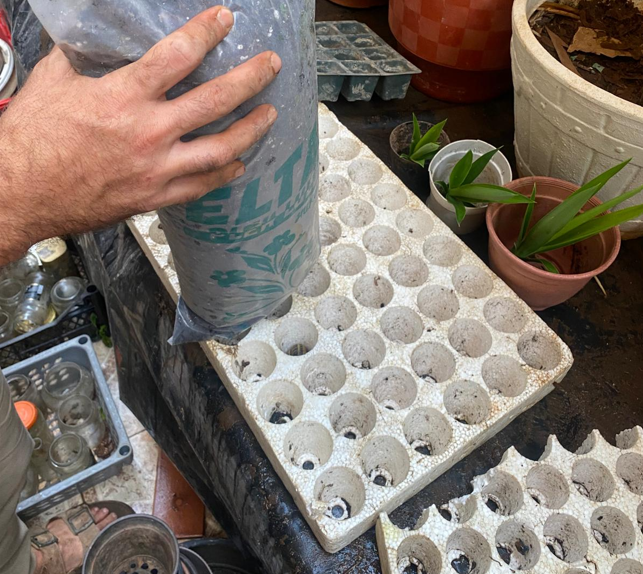
Figure 4 – Picking a Pot for Planting
3. Soil is placed on top to form the planting layer.
Once the layers are prepared, the seeds are sown, lightly covered with soil, and watered thoroughly to initiate germination.
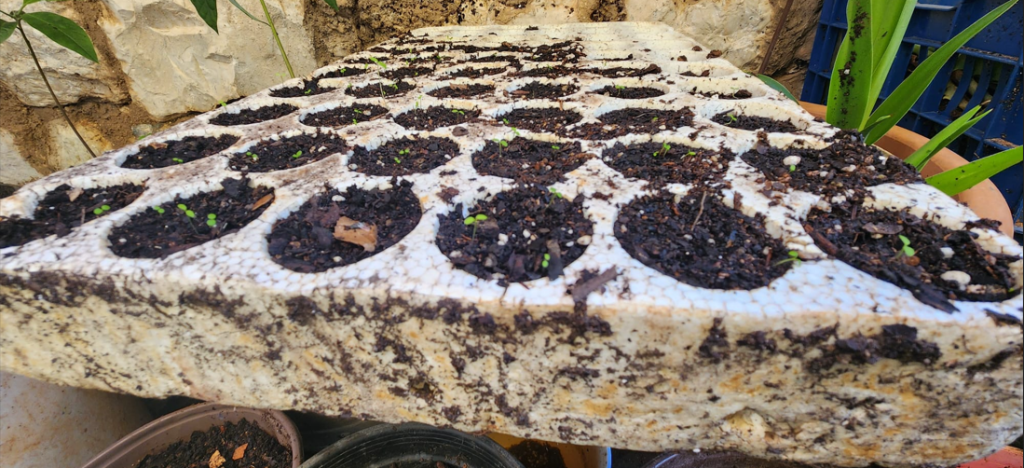
Figure 5 – Leaves starting to grow
Figure 5 (above) shows the early results of this process, where the first small leaves have begun to emerge—an encouraging sign of healthy growth and successful planting.
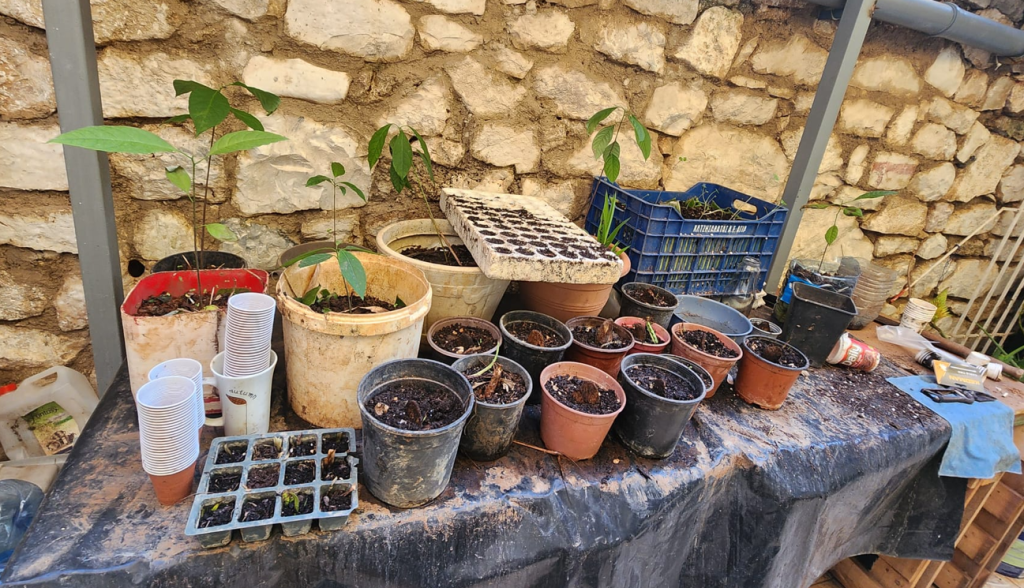
Figure 6 – Selection of Seeds
In Image 6, we can see a diverse selection of seeds that have been planted, including avocado, chillies, and mangoes. This variety demonstrates the gradual expansion of our planting efforts and highlights our focus on cultivating both fruit-bearing trees and essential food crops for the long-term development of the farm.
Another example of our sustainable planting approach is the propagation of aloe vera from the backyard. Mature aloe vera plants are carefully cut at the root, allowing us to separate healthy pups that can be replanted into individual pots within the garden area. This method not only increases the number of aloe plants available for the farm but also supports the natural growth cycle of the mother plant.
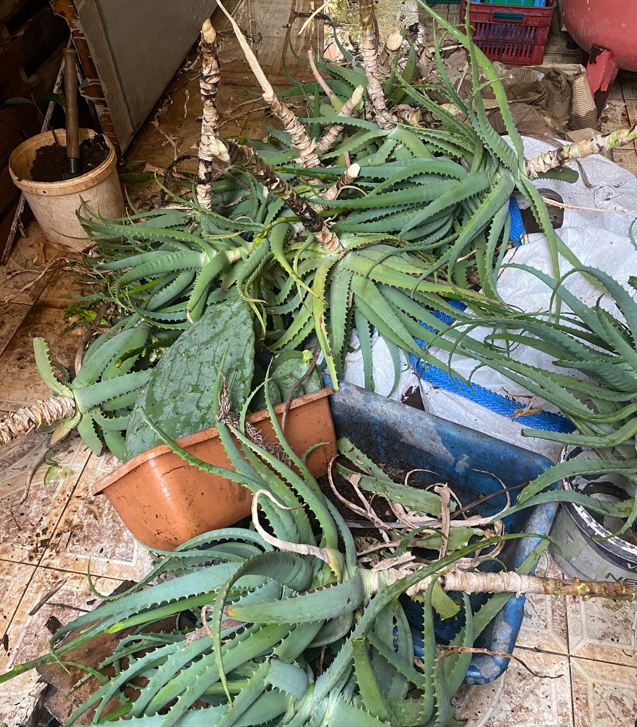
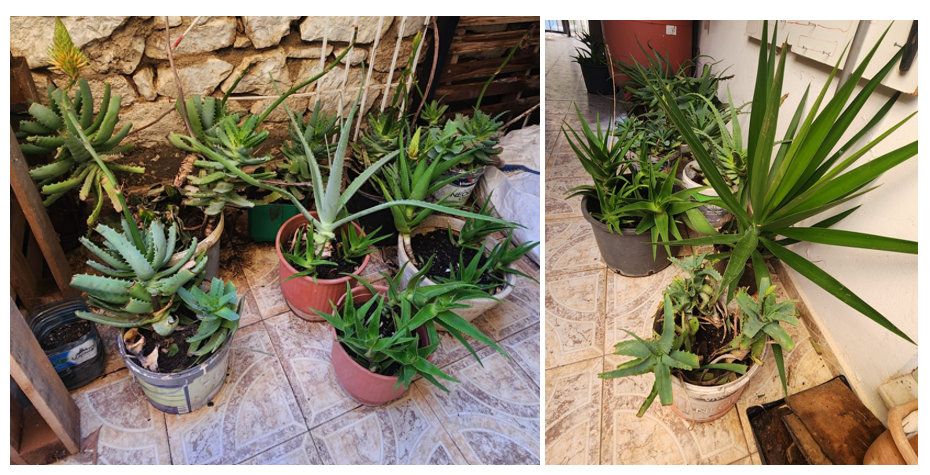
Figure 7 – New and Pruned Aloe Vera
In addition to producing new plants, the pruning process provides us with usable plant material. The trimmed aloe leaves—after being cleaned and properly processed—can be incorporated into the second step of our potting method. These leaves, when added to the layer of green material, contribute valuable moisture and nutrients to the soil mix. This ensures that every part of the plant is utilized efficiently, reinforcing our commitment to low-waste, resource-conscious gardening practices.
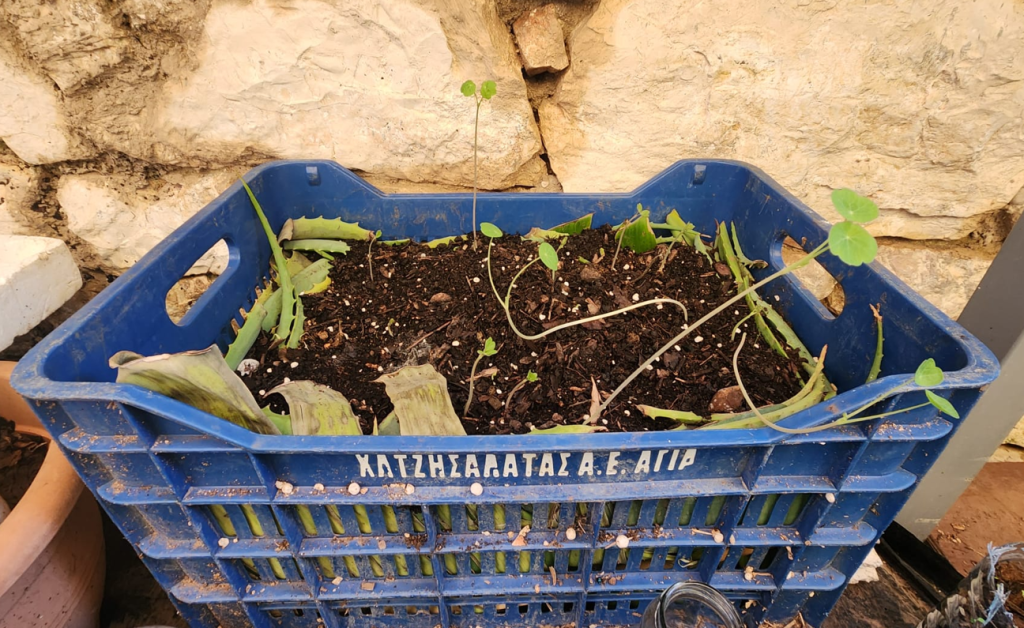
Figure 8 – Example
In Figure 8, we can see a clear example of how we make use of all available natural resources to create new plants. In this case, banana tree leaves have been placed at the base of the pot to help retain moisture and ensure the water stays within the soil for longer periods. On top of this, a layer of dry leaves has been added to promote aeration, followed by green leaves to introduce freshness and nutrients. Finally, soil from our compost has been used as the top layer, providing a rich and fertile environment for growth.
Once the layers were prepared, a variety of seeds were spread across the surface. As shown in the image, the first small leaves are already beginning to emerge, demonstrating the effectiveness of this low-waste, resource-efficient planting method.
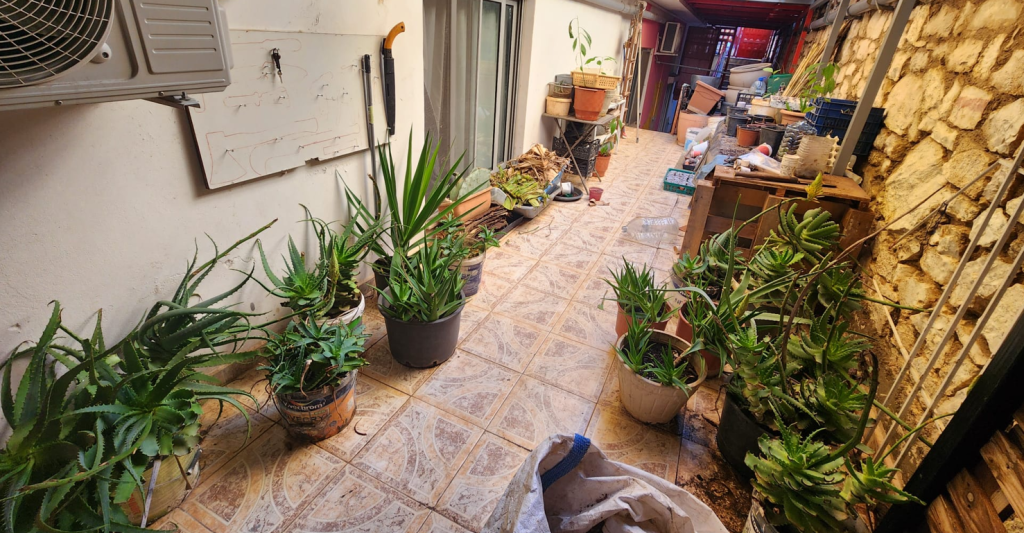
Figure 9 – Full House